
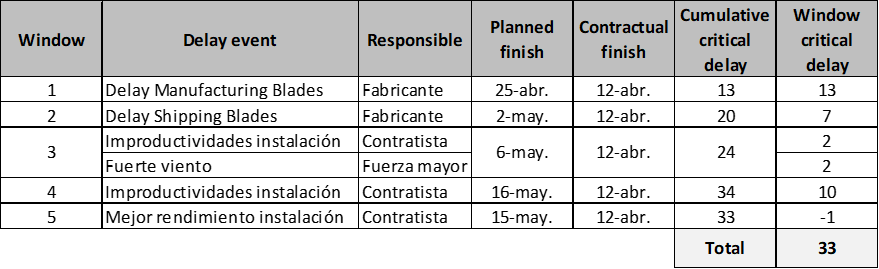
Case Study: Time Slice Windows Analysis Time Slice Windows Analysis divides the project into time periods and analyses each period using the programme update available at the beginning of that window. The objective is to understand how delay developed over time, not only where the project finished late. The windows are normally based on regular update dates, such as monthly or biweekly updates. Each window has a starting forecast, progress achieved during the period and a closing forecast that shows the movement of completion and critical path.
For every window, the analyst checks planned work, actual progress, changes in logic, added or removed activities, critical path movement and delay events that occurred during the period. This creates a chronological explanation of the project delay. The method is particularly useful when the critical path changed during the project. It helps avoid the mistake of judging the entire project using only the final as-built critical path.
A good windows analysis does not overload the reader with schedules. It summarises each period with the key facts: forecast movement, critical activities, delay events, mitigation actions and responsibility where it can be supported. The strength of the method is its contemporaneous perspective. It shows what was known at the time, which decisions were available and how the project forecast evolved from one update to the next.
From a planning point of view, this point should be read together with the baseline, the current update, the lookahead, the progress records and the evidence available on site. The objective is not only to describe the concept, but to understand how it affects dates, responsibilities, resources and decisions during execution. In practice, the planner should translate this information into a sequence of actions: confirm the scope, check the logic, validate the data with the team, identify the constraint or risk, update the forecast and explain the consequence in a way that management can use.
This is what turns a schedule from a static document into a control tool.