
The most common causes of delay in a construction project depend largely on the country where the project is being developed, the type and scale of the project, the management of site supervision and the performance of the contractors. Although every project is different, the most frequent delays that affect project completion can be analysed in general terms. Some causes may recur in projects in different contexts, but their significance must be assessed in each case.

The ten causes with the greatest impact on construction projects are listed below. They are not presented in order of importance because every country and every project has its own circumstances, and it is therefore extremely difficult to determine the most probable cause of delay in advance.
Design changes and change orders
During the design of a project, three engineering phases can be distinguished. The first phase is conceptual engineering, where the technical and economic feasibility of the project is identified. The second phase is basic engineering, where the basic specifications are defined.
In the third phase, detailed engineering, all issues and problems detected in the previous phases are resolved, and all components, resources, facilities and relevant aspects are precisely defined in a set of documents that allow the project to become reality.
In large construction projects with many stakeholders, complex infrastructure or ambitious designs, design changes are common during the detailed engineering stage. These changes can delay the delivery date of the designs. The delays can become critical if they continue for too long or if the modifications are very significant, because projects usually do not wait until detailed engineering is fully defined before starting the construction stage.
During construction, even when detailed engineering has been developed with good quality documents, certain modifications are likely to be required through change orders. These modifications may be needed because of errors in land measurement, changes of opinion by the promoter or owner, changes in project scope or design problems that make execution impossible.
Unrealistic contract duration
During the tender stage, contractors often make very optimistic estimates in order to secure the award of the project. In later phases, excessive optimism may also be maintained because of overconfidence or lack of experience.
In order to estimate a realistic construction duration, detailed planning must be carried out, preferably using specialised planning software. This makes it possible to manage a large number of activities, create logic through relationships, estimate activity durations based on available resources, calculate the critical path, analyse resource overload and obtain many other advantages.
Economic issues
The cost of the different materials or processes required to execute the project can vary significantly compared with the initial budget. Logistics can also be affected by these variations. For example, between 2020 and 2021, maritime transport prices increased considerably because of COVID. These cost overruns generate delays because activities are postponed due to lack or shortage of materials or equipment, especially when they are required to complete a critical activity.
In addition to price variations, the liquidity of the builder or contractor plays a fundamental role in the proper progress of the project. If the necessary financial resources are not available, one of the parties may be unable to make the corresponding payments for salaries, material rental, utilities, material orders, insurance policies and other obligations. These payment problems lead to work stoppages and direct delays, which may become critical.
Inadequate project planning
Project planning is one of the most important initial processes because it allocates resources, calculates the dates of the main tasks to be performed, analyses possible conflicts or interferences and determines the critical path. Detailed planning makes it possible to obtain a realistic completion date and an approximate cost.
During execution, one of the objectives of good planning is to minimise the impact of delays, create a plan that is shared and efficiently understood by all stakeholders, and detect interferences and conflicts between work fronts. In addition, a good planning team can reduce the application of delay penalties and prepare a solid basis for the defence of a claim through a proper analysis of the causes of delay.
Inadequate planning usually leads to interferences between work packages, delays due to lack of labour, materials or equipment, lack of visibility over work completion, underused resources and many other problems.
Permit delays. Sociopolitical instability
Every construction project requires several permits or licences to be processed before the works can start. A delay in permit processing, whatever the cause, has a direct impact on the start of several activities, or even all the activities to be performed. It is essential to know the documentation that must be submitted and the regulations that apply in each country or region.
The sociopolitical situation and labour conditions must be assessed in the specific setting of each project. Strikes, armed conflicts or extortion can stop all or part of project execution; their likelihood and impact must be assessed against local circumstances.
Poor communication and coordination between the parties
Lack of communication or poor communication between the different members of a project generates many problems and inefficiencies that usually affect the execution deadlines, the budget and worker safety. Over time, this situation can lead to a loss of trust and eventually to disputes in the form of claims.
Proper written communication in construction should be carried out through different documents such as manuals, daily reports, progress curves, drawings, photographs, requests for information (RFIs), change orders, burofax, email and other records. Verbal communication should also take place through construction meetings and telephone calls.
The existence of communication does not mean that it is effective. Information must not only reach the correct recipient on time, but must also be understood. A delay in sending a document can affect the start or finish of critical activities, and if the information is not understood it can lead to execution errors or coordination problems.
Within the same team, all members must understand the final objective and coordinate their actions in order to achieve it on time and in the required form. The following example illustrates the importance of communicating efficiently in a construction project.
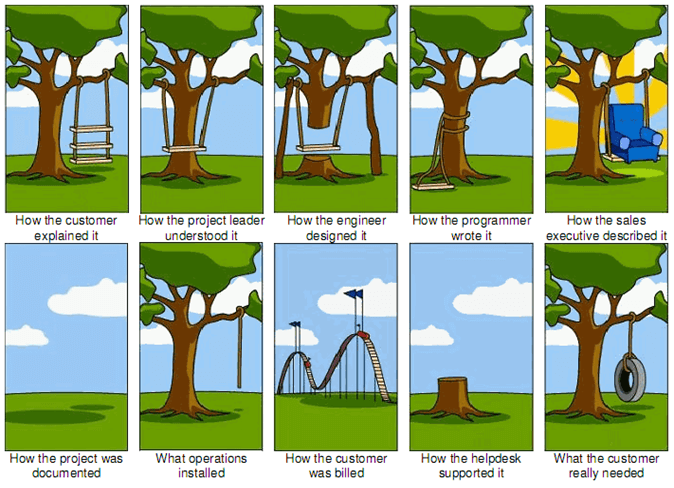
Delay in decision-making
Sometimes, even when communication is correct and the different problems or issues are transmitted and understood on time, large companies with equally large organisational charts suffer from the problem of internal bureaucracy. The procedures required to make relevant decisions, although necessary, can cause major delays.
Poor staff planning, such as unbalanced personnel rotations, can generate a delay in the decision to be made at specific moments when the signature or opinion of an expert or responsible person is required.
Shortage of qualified and experienced workers
The availability of workers with training and experience in large construction projects depends on the labour market and the skills required. Where many projects take place in the same area at the same time, finding enough qualified and experienced workers may become more difficult.
In cases where experienced personnel are critical, if the problem is identified and properly planned, workers from other countries can be hired to train local personnel adequately and complete the project on time. This also reduces costs because it avoids the need to expatriate a large number of employees.
Delay in procurement of materials
Procurement means the management of the acquisition and transport of the different materials and equipment required for the project.
Countries with low labour costs and large production capacity often absorb the greatest number of orders. This can lead to factory saturation and, therefore, long waiting lists for product supply.
It must also be considered that any material or equipment has a greater risk of delay the further it must be transported, due to weather, road closures, traffic congestion, human errors and other causes. In projects with very tight timeframes and significant penalties, this must be considered because a material may be cheaper but may not compensate for the transport risk to site.
Adverse weather conditions
Sometimes weather conditions can become a limiting factor for carrying out certain construction works.
Very low or very high temperatures, strong winds and heavy rainfall can cause construction to stop until suitable and safe working conditions exist.
Some projects must take this into account when planning the works and calculating the expected completion date. For example, in the construction of a wind farm, it is impossible to lift wind turbine components in strong winds. However, the areas where wind farms are located are usually very windy.
If the weather conditions are not properly planned and considered, activities such as spreading clay material layers in earthworks may be scheduled during the rainy season, which will undoubtedly cause a delay compared with the expected productivity.
On the other hand, some extreme weather conditions can damage work already executed, generating delays and various other problems.