
Technical knowledge, not marketing.
Technical articles integrated into PlanBuilt on planning, delays, data and project control.
51 published articles.
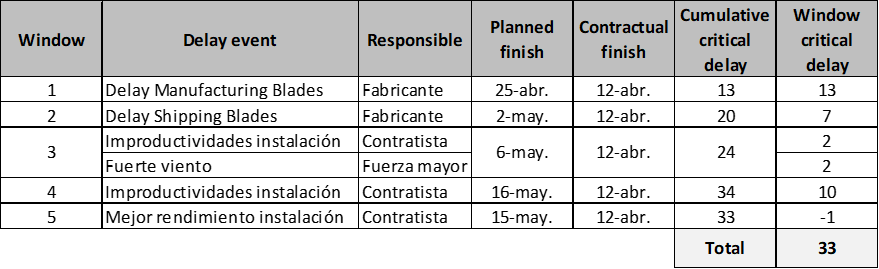
Case Study: Time Slice Windows Analysis
Case Study: Time Slice Windows Analysis Time Slice Windows Analysis divides the project into time periods and analyses each period using the programme update available at the begin
Read more
Time Slice Windows Analysis
This is another method that uses project segmentation by windows, but unlike APABW it depends on contemporaneous schedules issued by the contractor.
Read more
Contracts and planning
The contract is the main tool available to all parties involved to ensure proper scope management.
Read more
Lookahead Schedule
In many projects it is not practical to use the master schedule, with hundreds or thousands of activities, to define and show the next tasks to be performed.
Read moreSchedule levels
There are 5 levels of detail for a schedule, each with a different objective, from contractual milestones to maximum activity detail.
Read more
Project Progress with Primavera P6
One of a planner's functions is to update project progress. Depending on the project phase and type, progress must be updated in different ways.
Read moreAutomating reporting and centralising data
Problem: data is scattered and the report is rebuilt manually every week. Solution: centralise everything on a single source of truth and automate reporting.
Read moreProject planning: when to subcontract it, when to internalise it and when it is not needed
Not every project needs a professional planner, and not every company should subcontract planning. An honest analysis of the three options.
Read morePlanBuilt methodology
Most delays do not start with a bad schedule, but with the gap between what is planned in the office and what happens on site.
Read moreFrom Paper Schedules to AI
In 30 years the sector has moved from paper schedules to real-time updates and AI. But there is a trap: many companies changed the tool without changing the method.
Read moreHow much does a planner really cost? Spain 2026
A planner's salary is only the tip of the iceberg: social security contributions, software and overhead must also be added.
Read more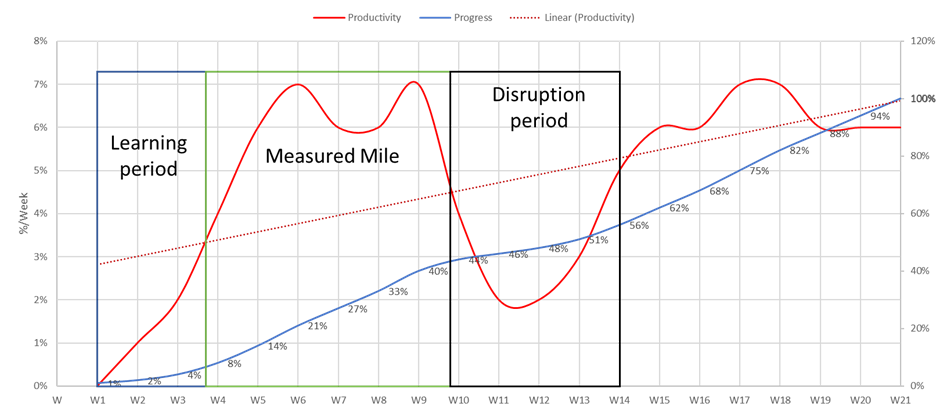
Measured mile analysis
The most common method for resolving a disruption claim is measured mile analysis. This methodology compares actual productivity with affected productivity.
Read more
Delay Analysis for Expert Reports
There are several delay analysis techniques for expert reports. The SCL recognises 6 techniques while the AACE recognises 8, although many have elements in common.
Read more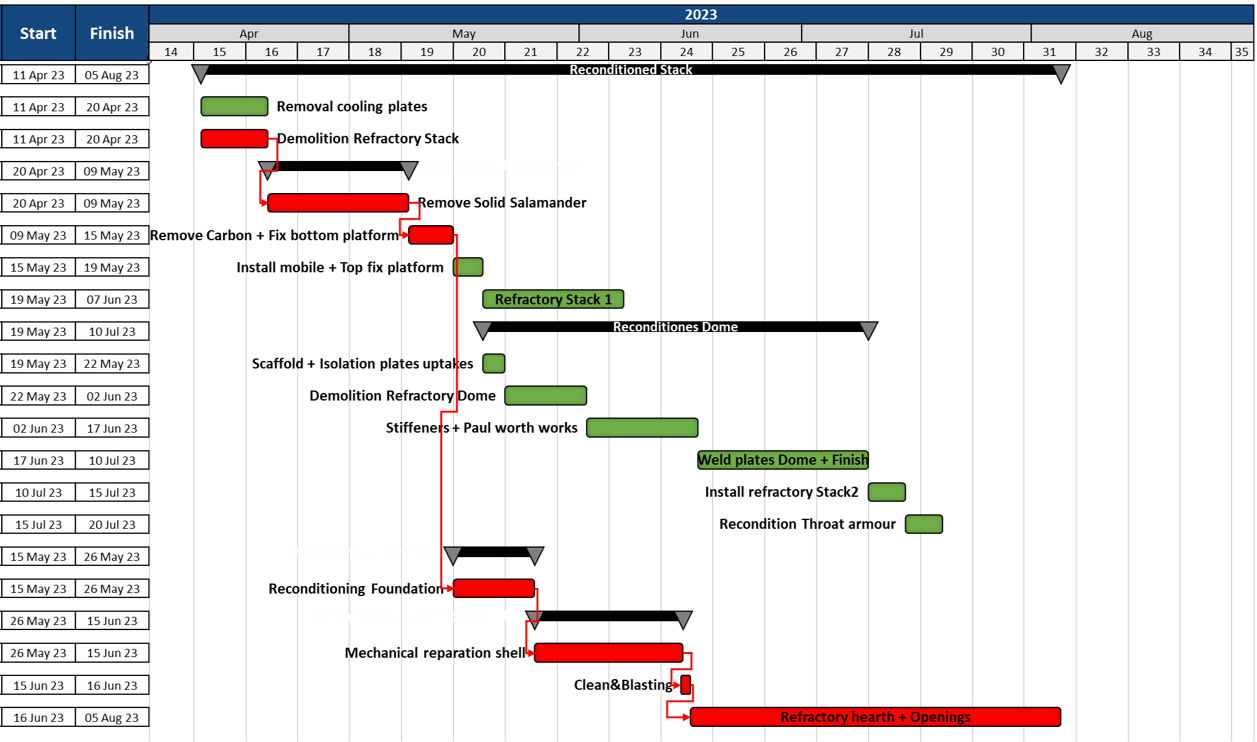
As-Planned vs As-Built Windows Analysis
The As-Planned vs As-Built Windows Analysis method applies windows analysis by comparing executed dates with planned dates.
Read moreCPM and Last Planner System
CPM and LPS operate at different planning levels: time-contractual model versus production control and site coordination.
Read more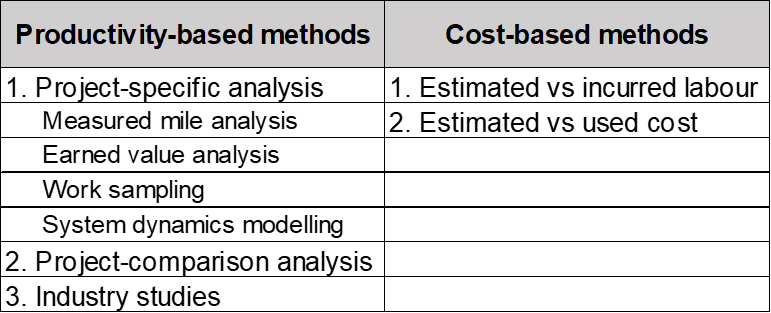
Disruption analysis
The disruption suffered by the contractor must be demonstrated through analytical methods and techniques that allow the loss of productivity to be evaluated and quantified.
Read more
Planning Best Practices
It is important to use best practices that improve the quality of the schedule and the planning process, and make it easier to detect errors and problems.
Read moreTypes of construction contracts: a simple guide to understand and consult them
Construction contract types require distinguishing how the project is paid, how it is organised and who assumes the risk.
Read moreExtension of Time EOT claim
Delays are almost inevitable. An EOT claim is the mechanism through which a contractor requests more time and avoids delay penalties.
Read more
Types of Claims in Construction
Given the complexity of many construction projects today, delays to the completion date are common, and therefore so are claims.
Read more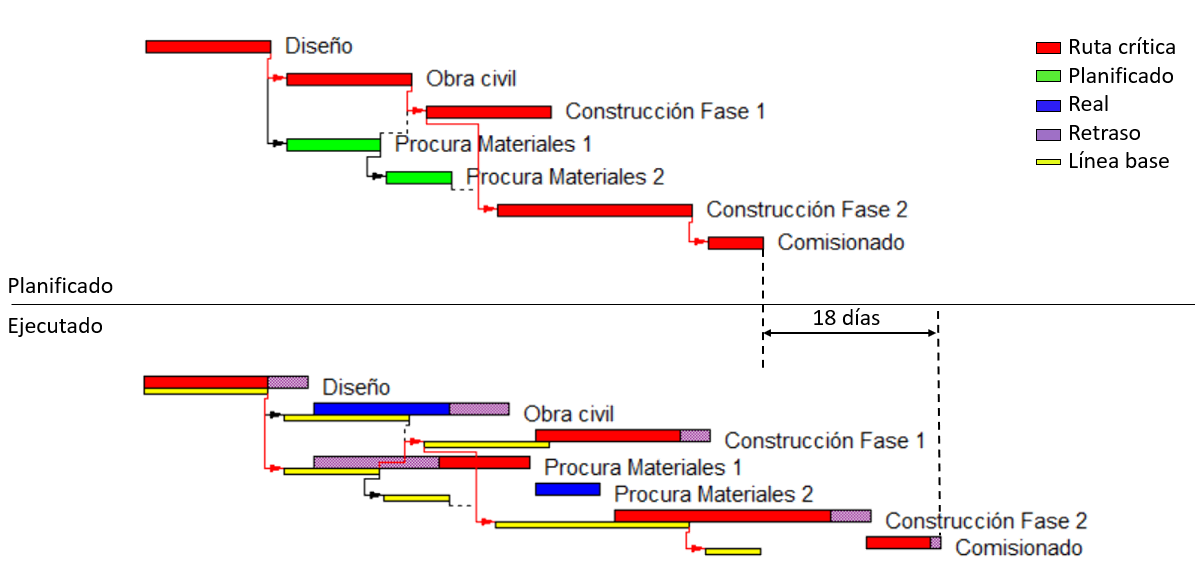
As-Planned vs As-Built
The As-Planned vs As-Built method is an observational technique that compares what should have happened with what actually happened.
Read moreThe role of the planner
The planner occupies a unique position because every function needs a time dimension.
Read more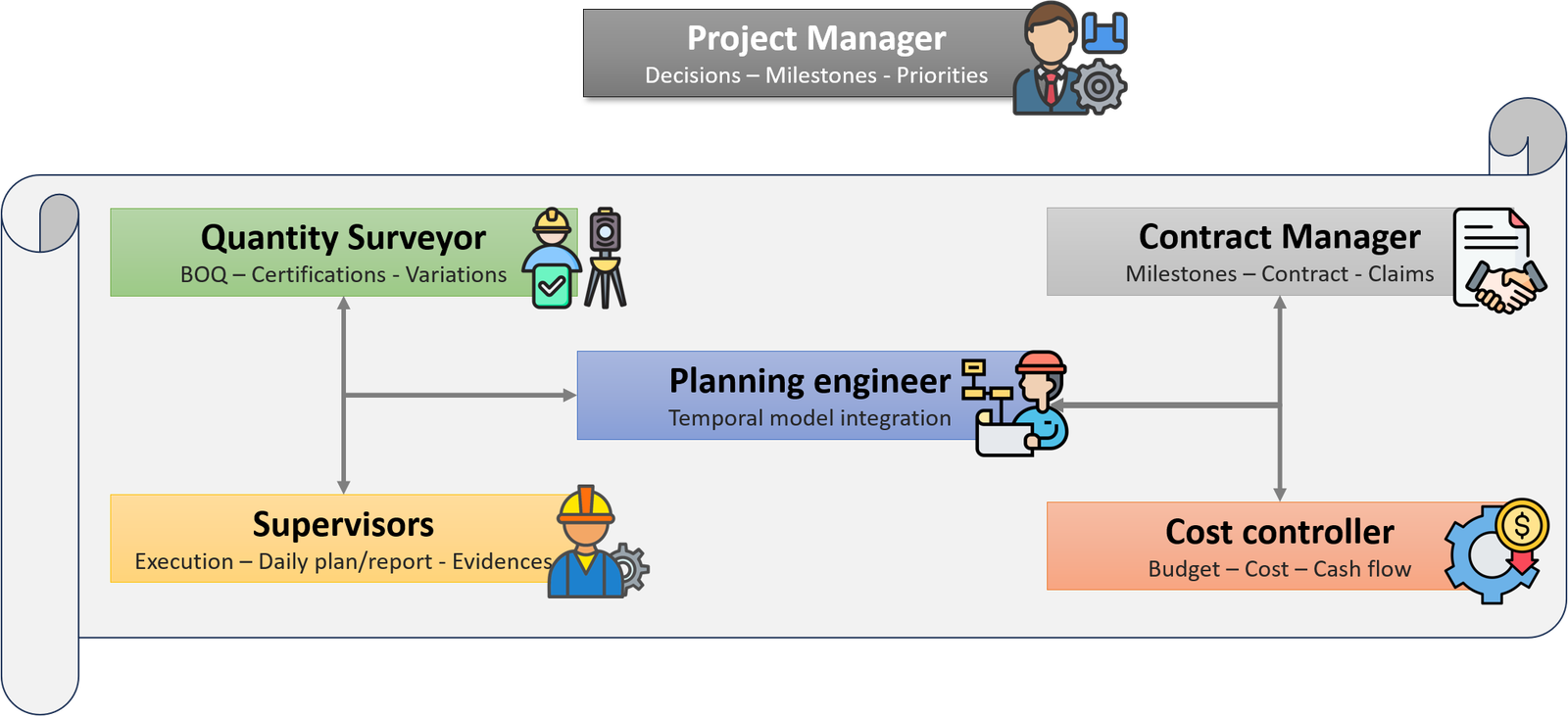
Project Controls Team
Planner, Quantity Surveyor and Cost Controller: how to integrate time, quantities, cost, contracts and execution in construction projects.
Read more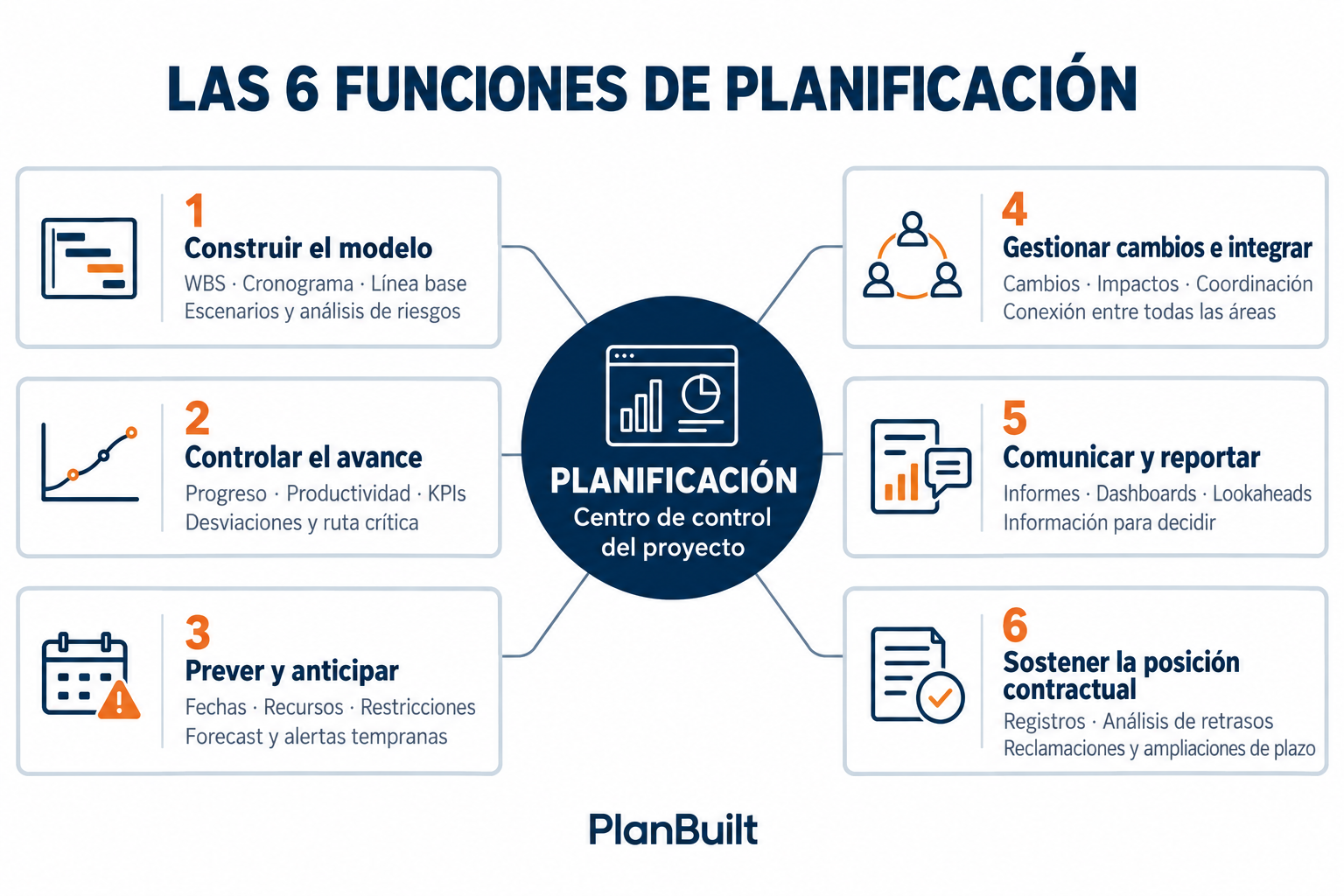
What a planning department really does
The department builds the time model, measures progress, anticipates deviations, assesses the impact of changes and supports the contractual position.
Read more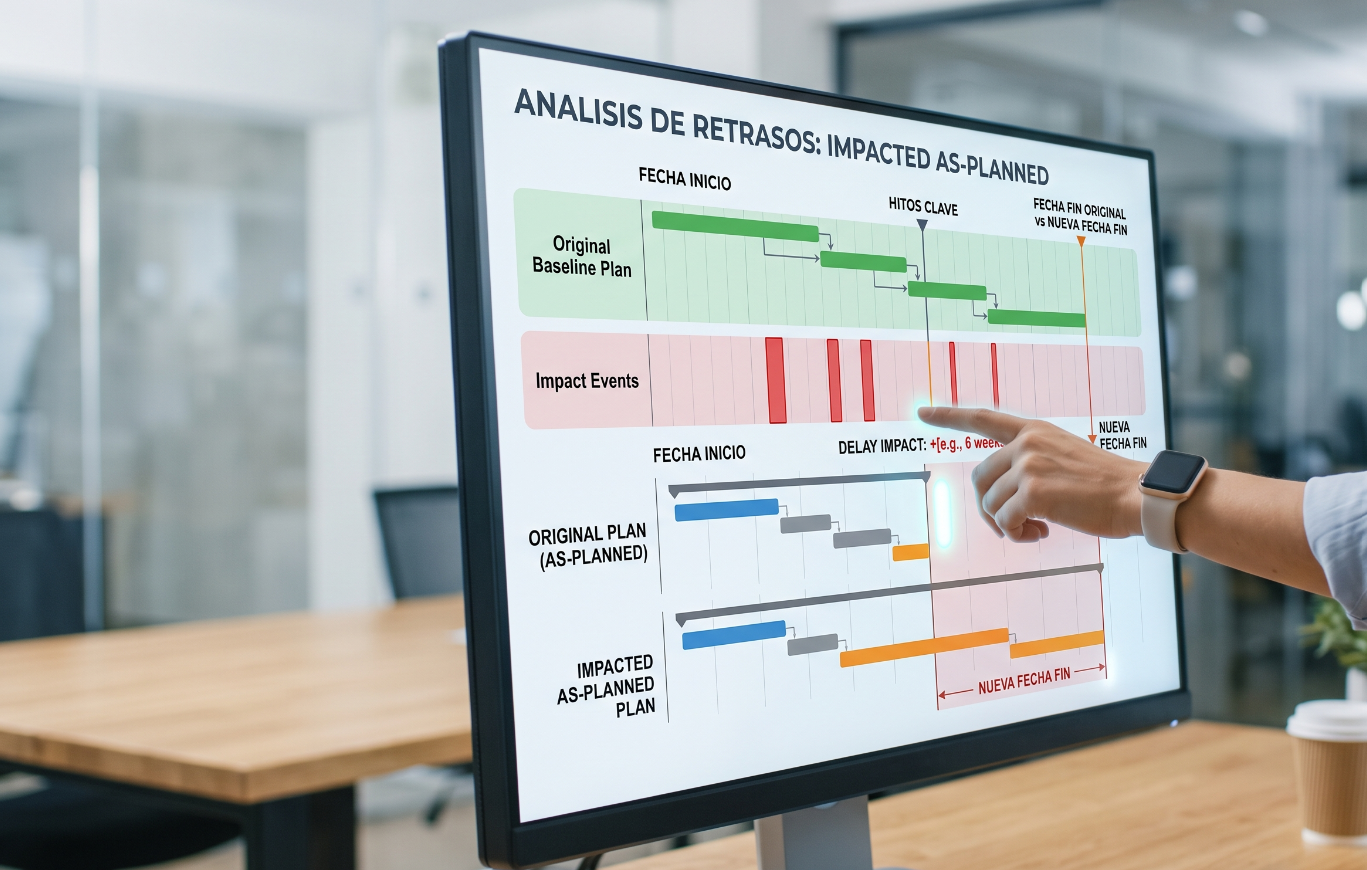
Impacted as Planned
IaP is a modelled technique based on creating a simulation by inserting activities into the baseline programme with all activities linked.
Read more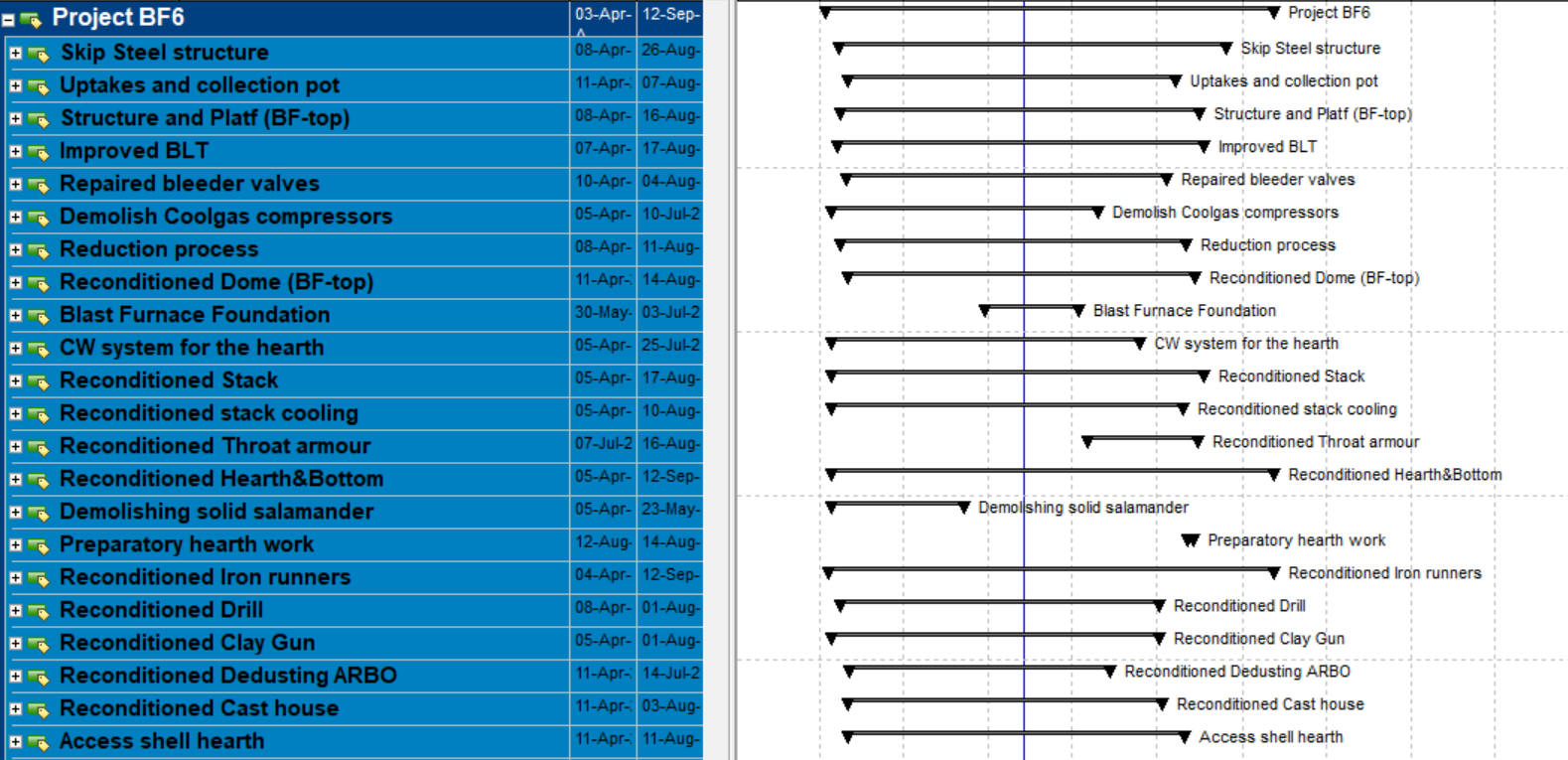
Steps to Create a Good Schedule
A good schedule should be structured in a way that is easy to understand while still providing enough detail to add value to the team.
Read more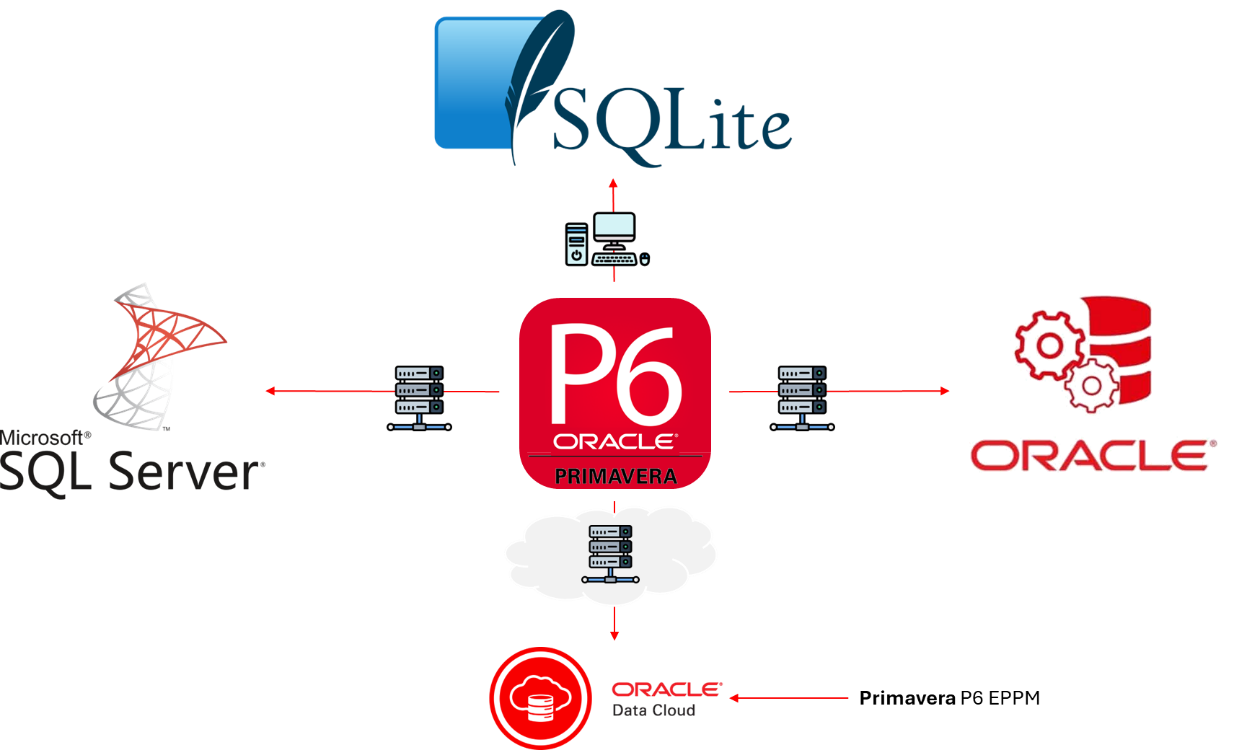
Primavera P6 database
In Primavera P6, project information is stored in a relational database instead of independent files as in MS Project.
Read moreConstraints
Constraints are used to artificially modify or restrict the dates of a milestone or activity. The recommendation is that a well-built schedule should not contain any constraints.
Read more
Critical Path in Primavera P6 and MS Project
The critical path of a project is the sequence of activities with zero float. It is the longest continuous sequence of activities in the schedule.
Read more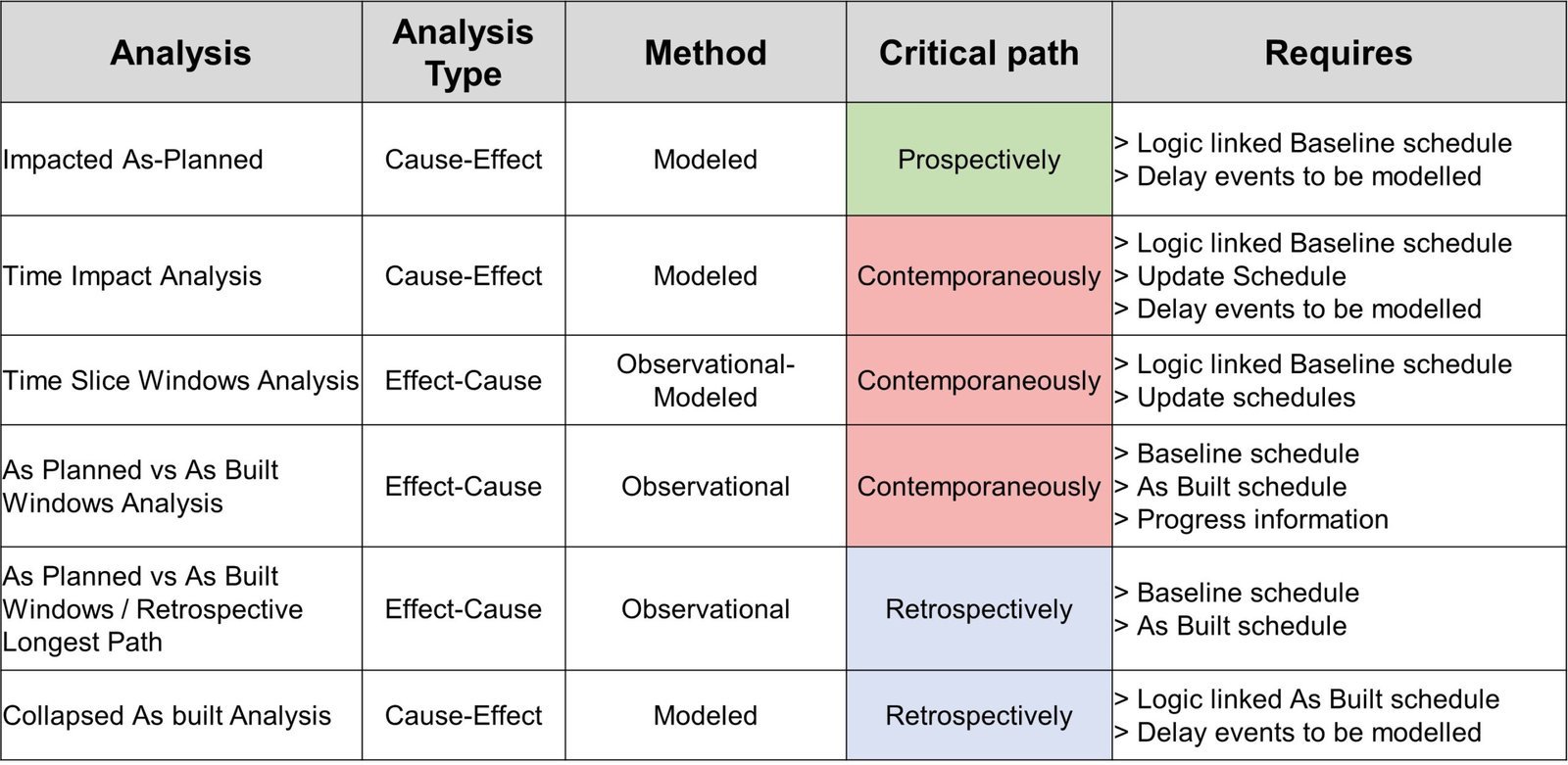
Delay analysis methods
Given the complexity of many modern construction projects, delays to the completion date are common because permits, labour, materials and interfaces must be coordinated.
Read more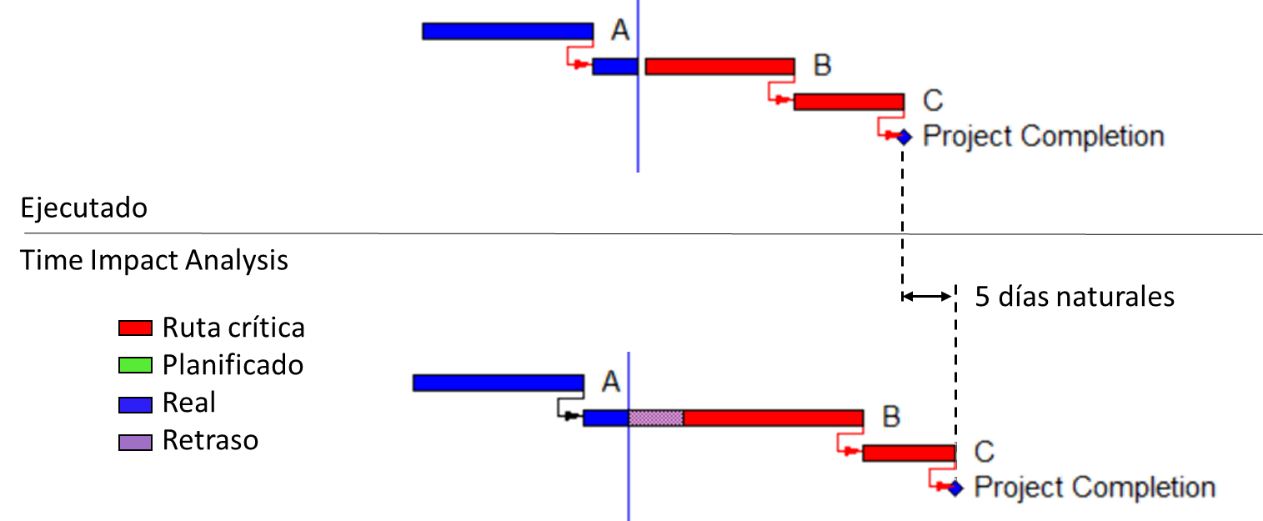
Time Impact Analysis
TIA is a modelled technique based on simulating delays in a schedule updated to a date before the delay event and recalculating the impact.
Read moreCollapsed as Built
This is a modelled technique based on scenario simulation. The simulation is carried out in Primavera or Project. It is not a recommended method for arbitration.
Read more
Impacted as Planned Case Study
Impacted as Planned is a modelled technique based on creating a simulation by inserting activities into the baseline programme with all activities linked.
Read more
Converting from Primavera P6 to MS Project
Sometimes it may be necessary to convert a schedule created in Primavera P6 to MS Project because of specific project requirements.
Read more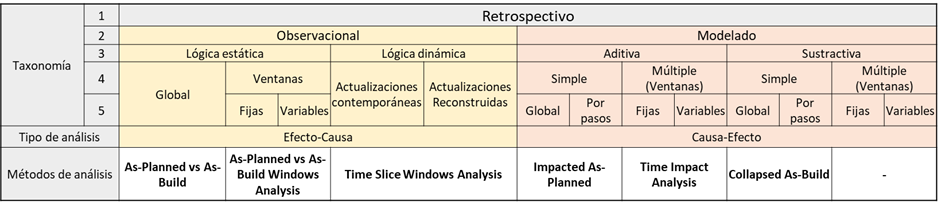
Classification of delay analysis methods (AACE/SCL)
To facilitate classification, the AACE taxonomy has been combined with the six main SCL methods.
Read more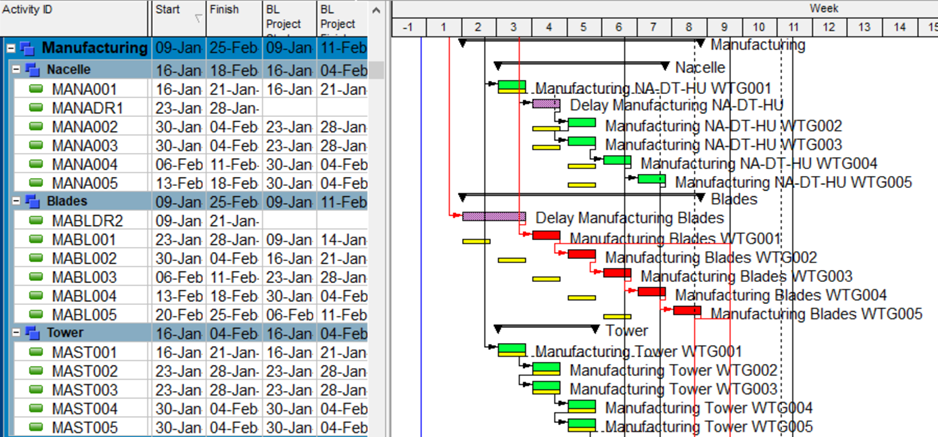
Collapsed as Built Case Study
The Collapsed as Built technique requires modelling the as-built programme. In this example, a wind farm with three main stakeholders will be analysed.
Read more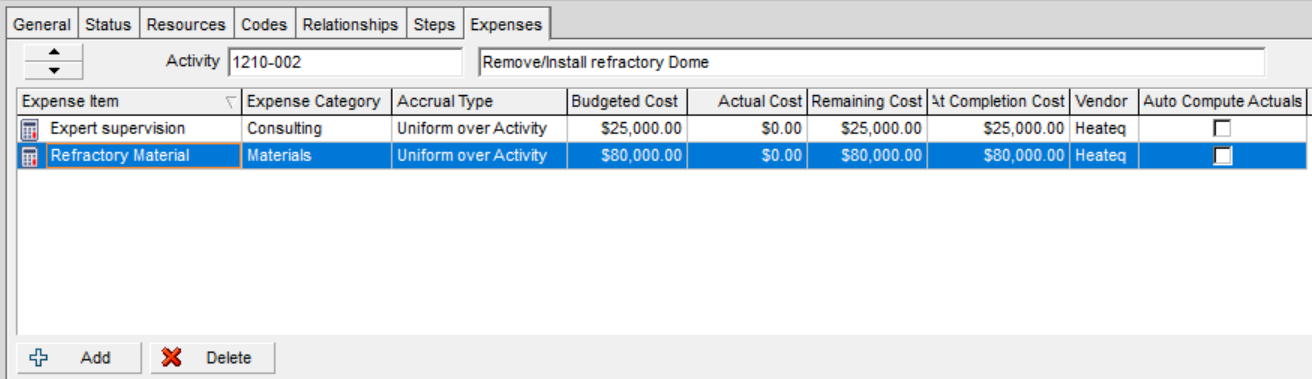
Costs and Earned Value in Primavera P6
In a construction project there are different types of costs, depending on the scope, type and scale of the project.
Read more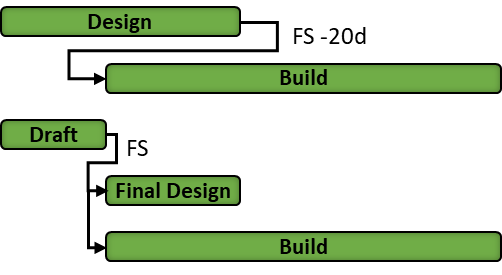
Assessing Schedule Quality
Planning quality can be analysed from a qualitative and quantitative perspective. The qualitative view is based on judgement, while the quantitative view uses measurable criteria.
Read moreRelevant factors in choosing the analysis method
The choice of analysis method can be the key difference between winning or losing an arbitration and can also produce different results.
Read moreDuration type in Primavera P6
In Primavera P6, Duration Type is a setting that specifies how the software should calculate the duration of an activity.
Read more
Causes of delay
Complex projects can suffer delays for many reasons, but some delay causes are common across most construction projects.
Read moreSite Sayings and Excuses: What the Workface Knows About Planning
On any construction site, before P6 there is oral tradition. Some sayings encode real planning discipline; others are excuses that sabotage it.
Read more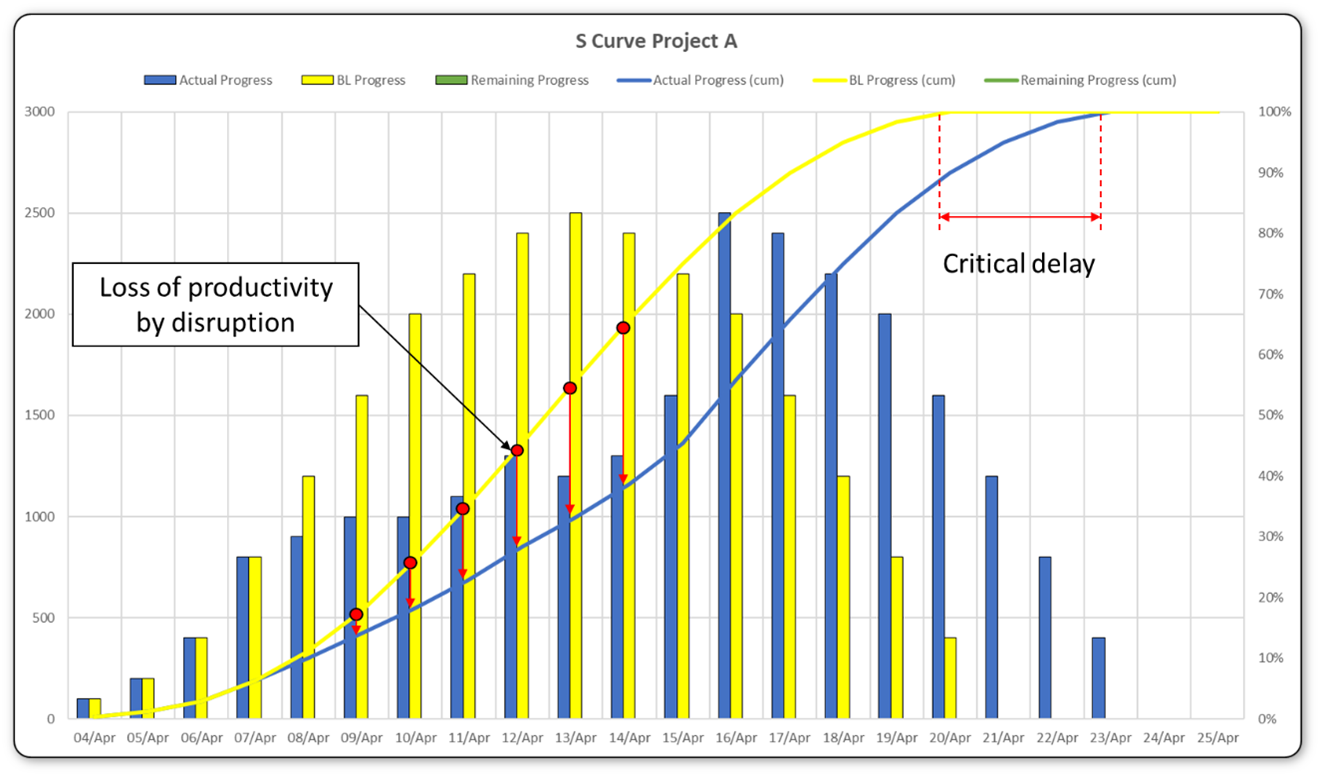
Pacing and disruption
Pacing occurs when the completion of an activity is consciously and voluntarily delayed.
Read more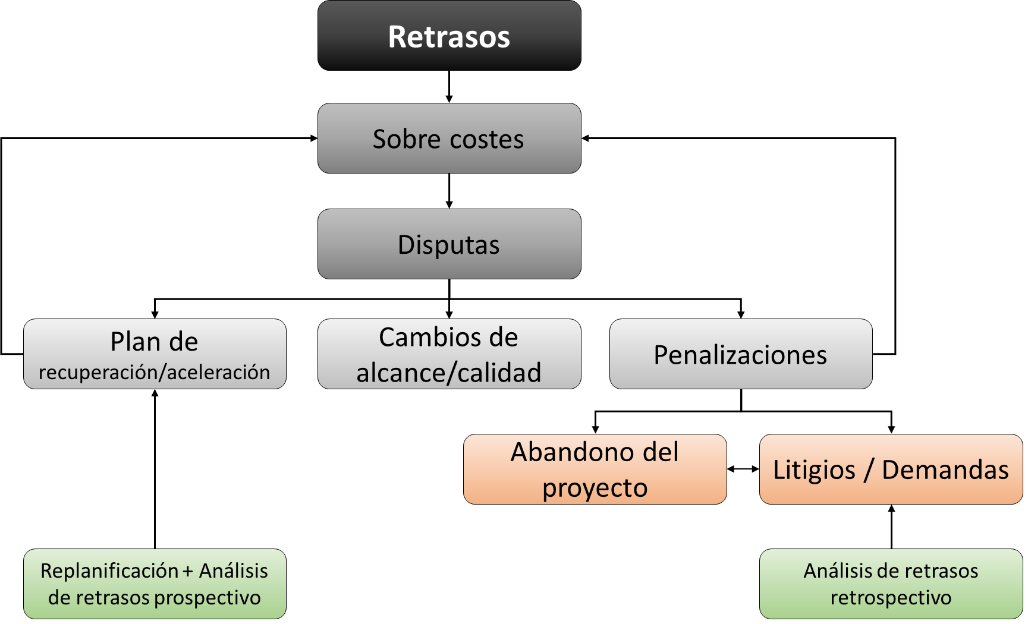
Delays in construction projects
A delay is any event that prevents agreed dates from being maintained. In complex works they are very common, and the associated extra costs must be borne by one of the parties.
Read morePower BI and Primavera P6
Primavera is the scheduling engine; Power BI is the analysis and visualisation layer it lacks. Reporting automation is the real objective.
Read more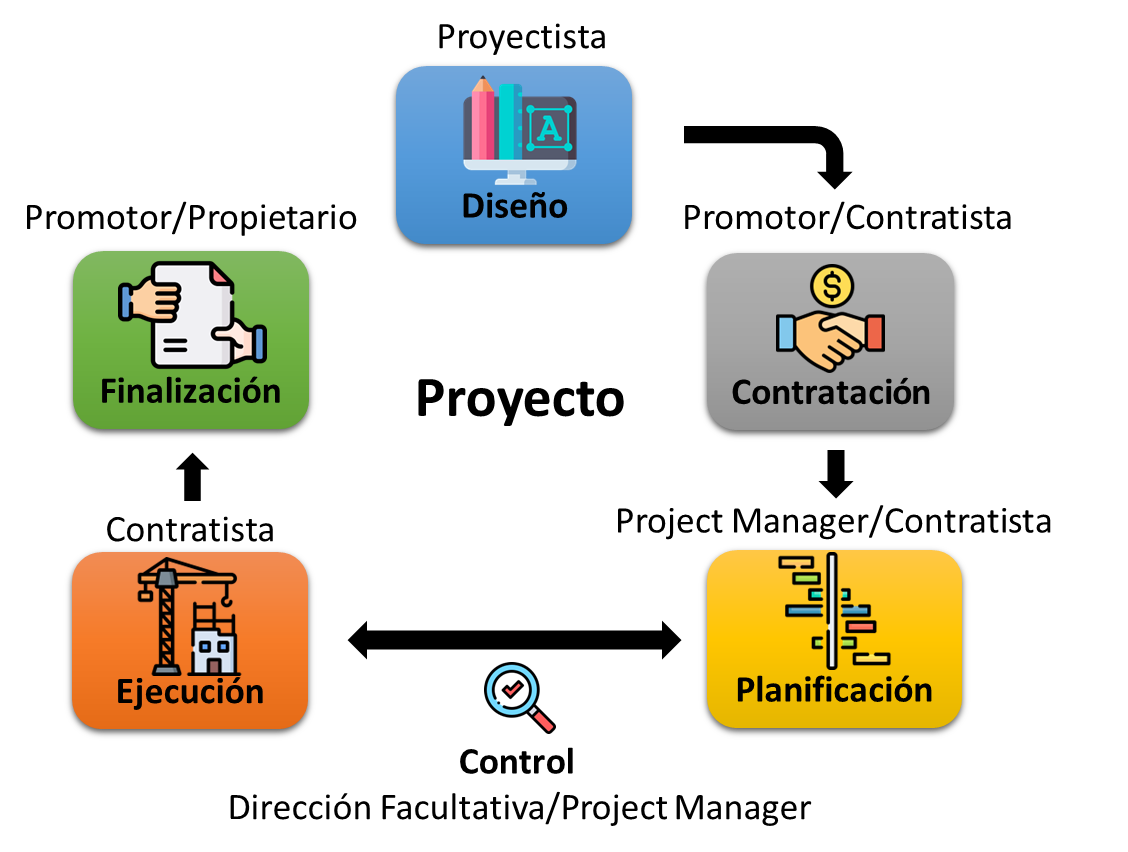
Participants in a construction project
Construction projects involve several parties whose roles and obligations affect progress, responsibility and delay analysis.
Read more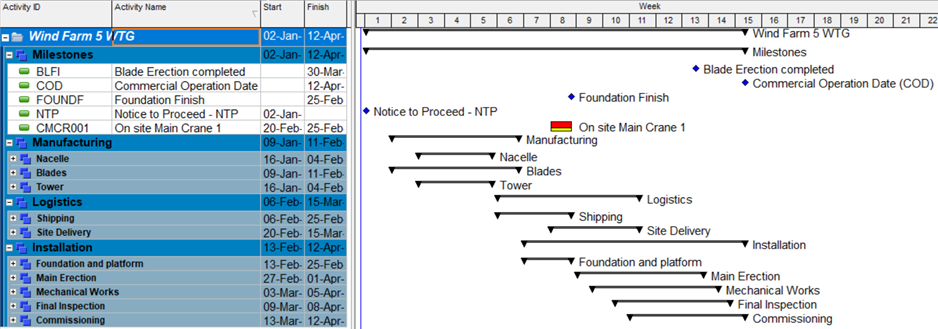
APvsAB Case Study
The analysis will be carried out from the manufacturer's point of view against the contractor.
Read more
The Secrets of a Good Planning Engineer
The planner plays a central coordination role between the different project management departments.
Read moreMS Project files vs P6 database
Project management is a complex task that requires advanced tools to plan, execute and monitor the different phases and activities.
Read more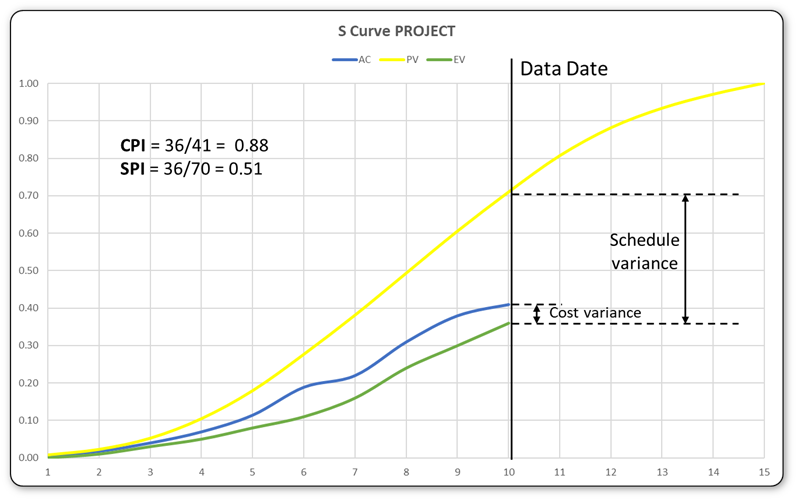
Earned Value Analysis
Earned Value Analysis is a technique for measuring project progress against the planned scope and budget.
Read moreRisk analysis in construction: how to anticipate delays and cost overruns
A good risk analysis does not prevent unforeseen events: it allows you to anticipate them, react quickly and make better informed decisions.
Read more